

Year after year, Women and Girls in STEM Month has established itself as a highlight of life at ENS. From mid-February to mid-March 2026, conferences, workshops, roundtables, and cultural events engaged students, researchers, partners, and patrons around a shared goal: taking concrete action to promote greater gender parity in scientific fields.
Beyond the program itself, this event also increases visibility for the Women and Science scholarship program supported by the ENS Foundation, a key driver of a policy actively pursued since 2023.
Making women scientists visible
Wikithon © Fondation de l’ENS
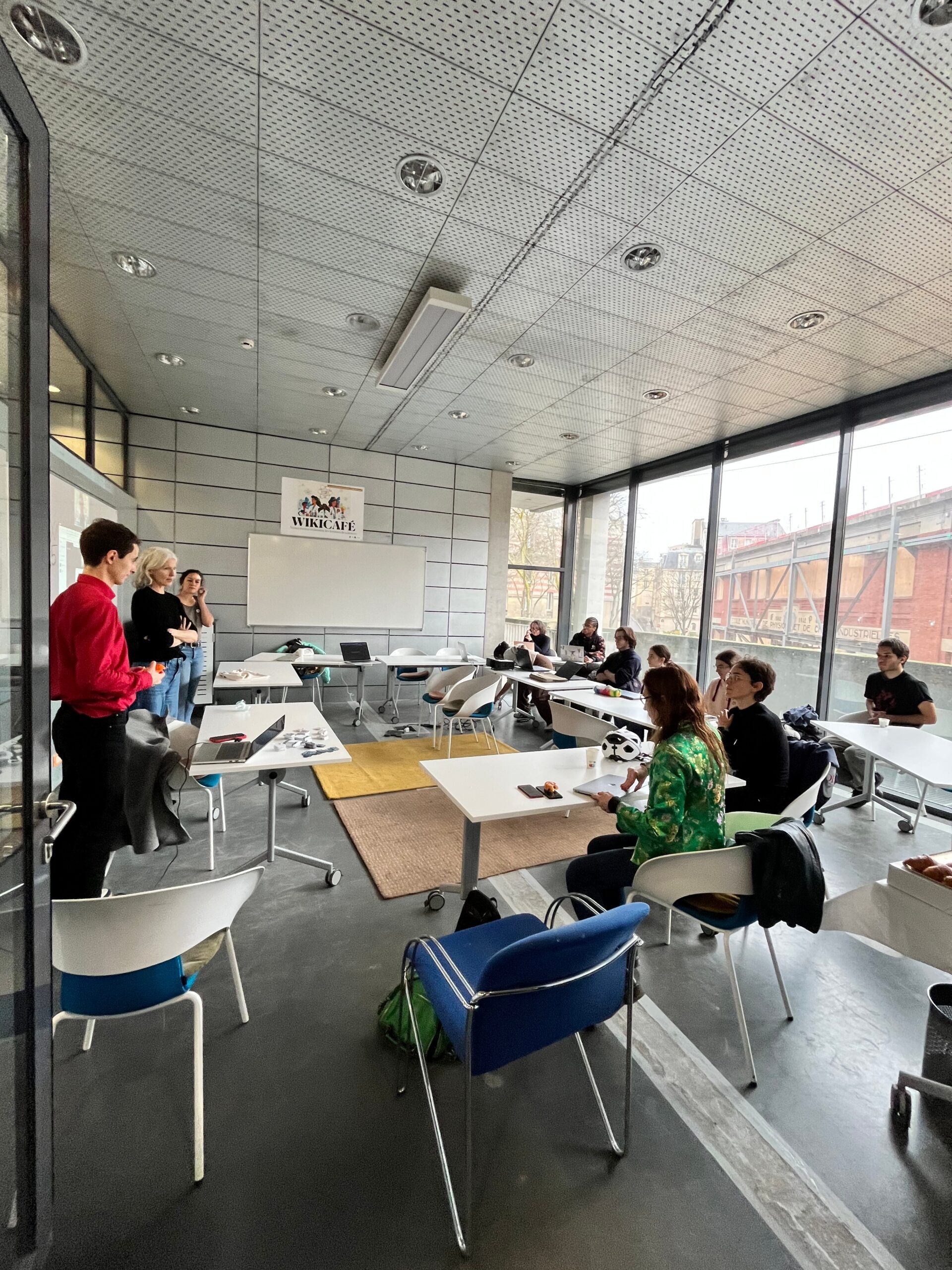
On February 11, an editathon brought together the ENS community around a clear objective: to enrich Wikipedia with articles about women scientists and their discoveries.
This initiative addresses a central challenge. The historical invisibility of female researchers fuels stereotypes and perpetuates the notion of science as predominantly male. Creating and disseminating reliable content about their work is a concrete step toward rebalancing representations.
Taking action from an early age
Valentine Blanpain © Fondation de l’ENS
Women and Girls in STEM Month continued its outreach to younger audiences through activities aimed at families and middle school students.
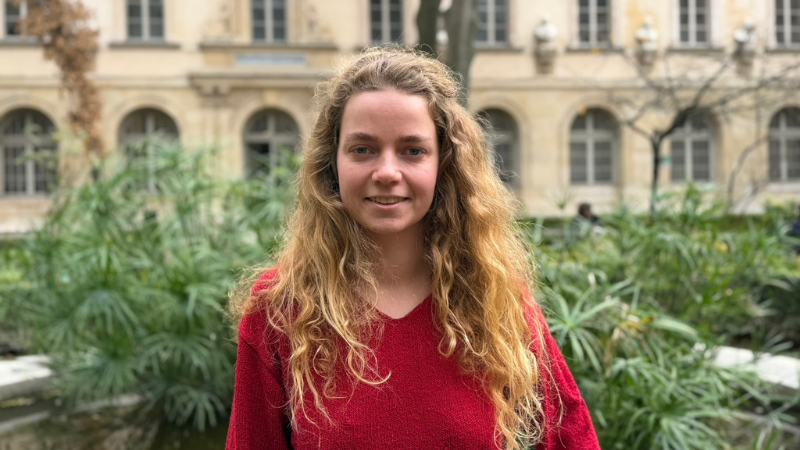
The conference “Little Explorers of Knowledge,” led by Valentine Blanpain, a mathematics graduate of ENS, invited children and parents to approach science with curiosity and rigor. Follow-up workshops in middle schools provided opportunities to challenge gender stereotypes in education, particularly in mathematics. The discussions proved rich: ENS is supporting the next generation in pursuing scientific studies.
Bringing initial inequalities into debate
© Fondation de l’ENS
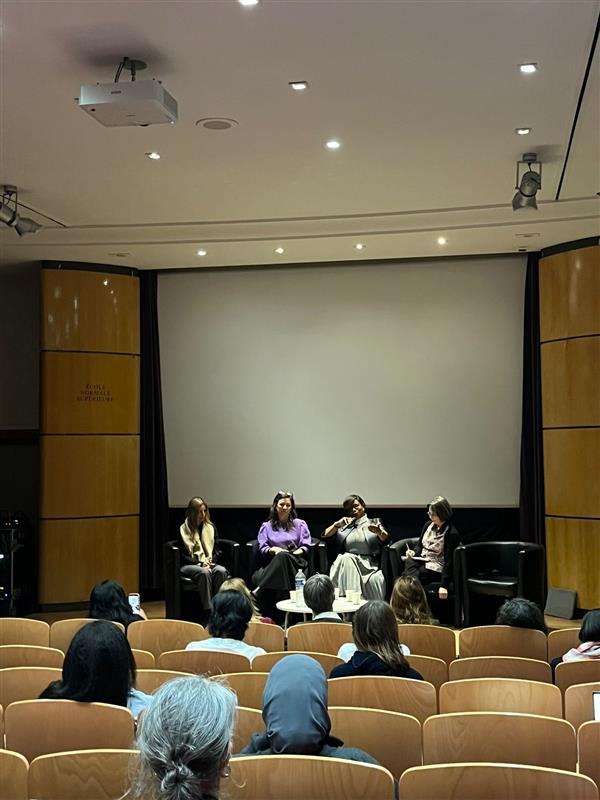
Two roundtable discussions continued this reflection. The first, “Being Different, Starting from Elsewhere: Overcoming Initial Inequalities,” examined the often-invisible mechanisms that hinder access to elite fields: stereotypes, lack of networks, and absence of role models. The discussion brought together Fouley Koïta, Deputy Director of Myriam Makeba Middle School; Clotilde Policar, Chemist, Professor, and Director of Science Studies at ENS-PSL; Elisabeth Moreno, Chair of the Board of Ring Capital and Ring Africa, President of Leaders Engagés, President of the Femmes@numérique Foundation and La Puissance du Lien, and Delegate Minister for Gender Equality, Diversity, and Equal Opportunities (2020–2022); Virginie Salmen, Co-founder and Director of ViensVoirMonTaf; and Marie Gabrielle Bertran, Postdoctoral Researcher at the Interdisciplinary Center on Strategic Issues (CIENS).
The second roundtable, focused on women in the space sector, gave engineers and experts working in still largely male-dominated environments a platform to share their experiences.
These discussions highlighted a central point: gender parity cannot be decreed. It requires proactive policies, support mechanisms, and collective engagement.
Culture as a space for recognition
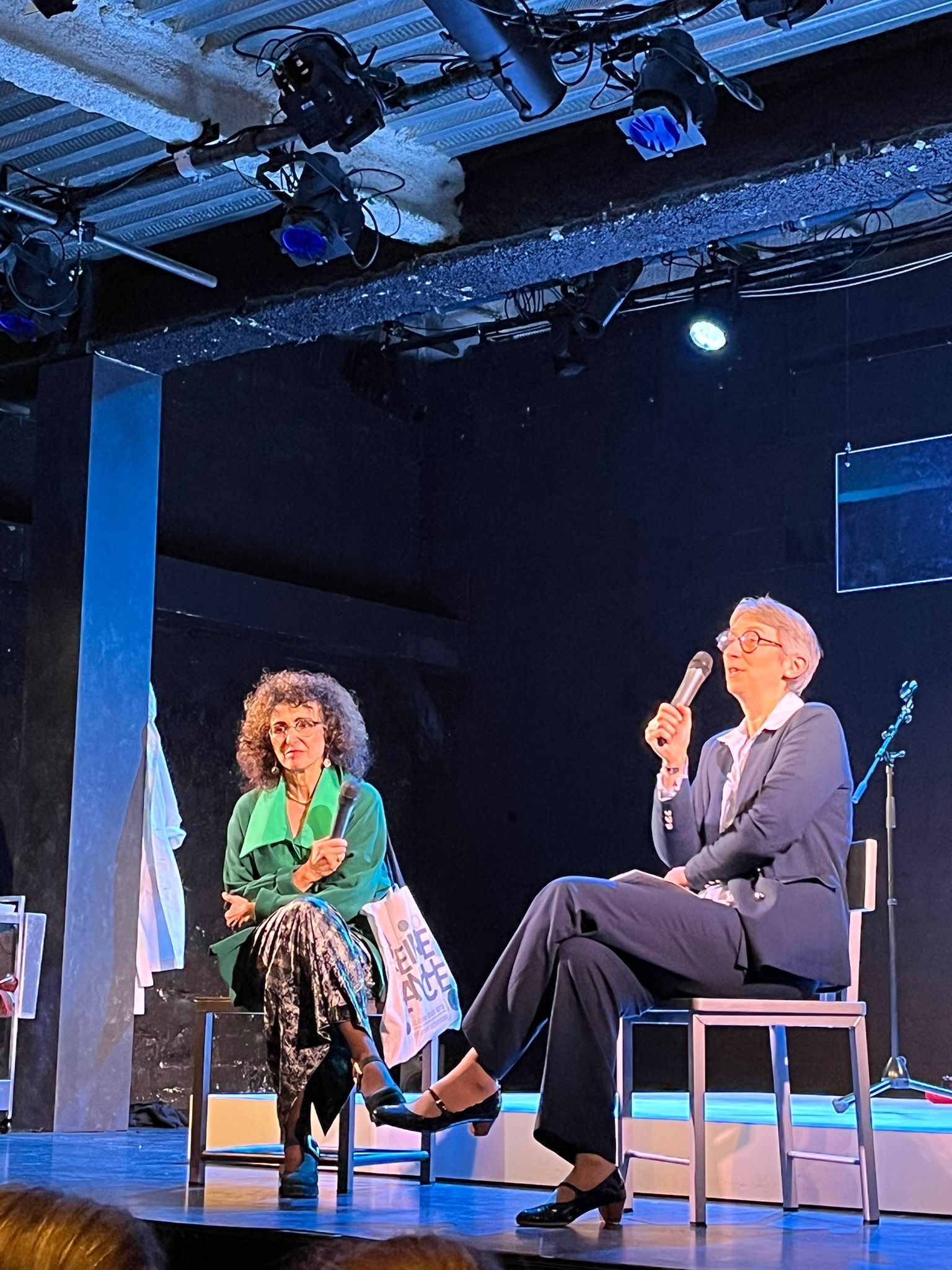
Elisabeth Bouchaud and Virginie Bonnaillie-Noël © Fondation de l’ENS
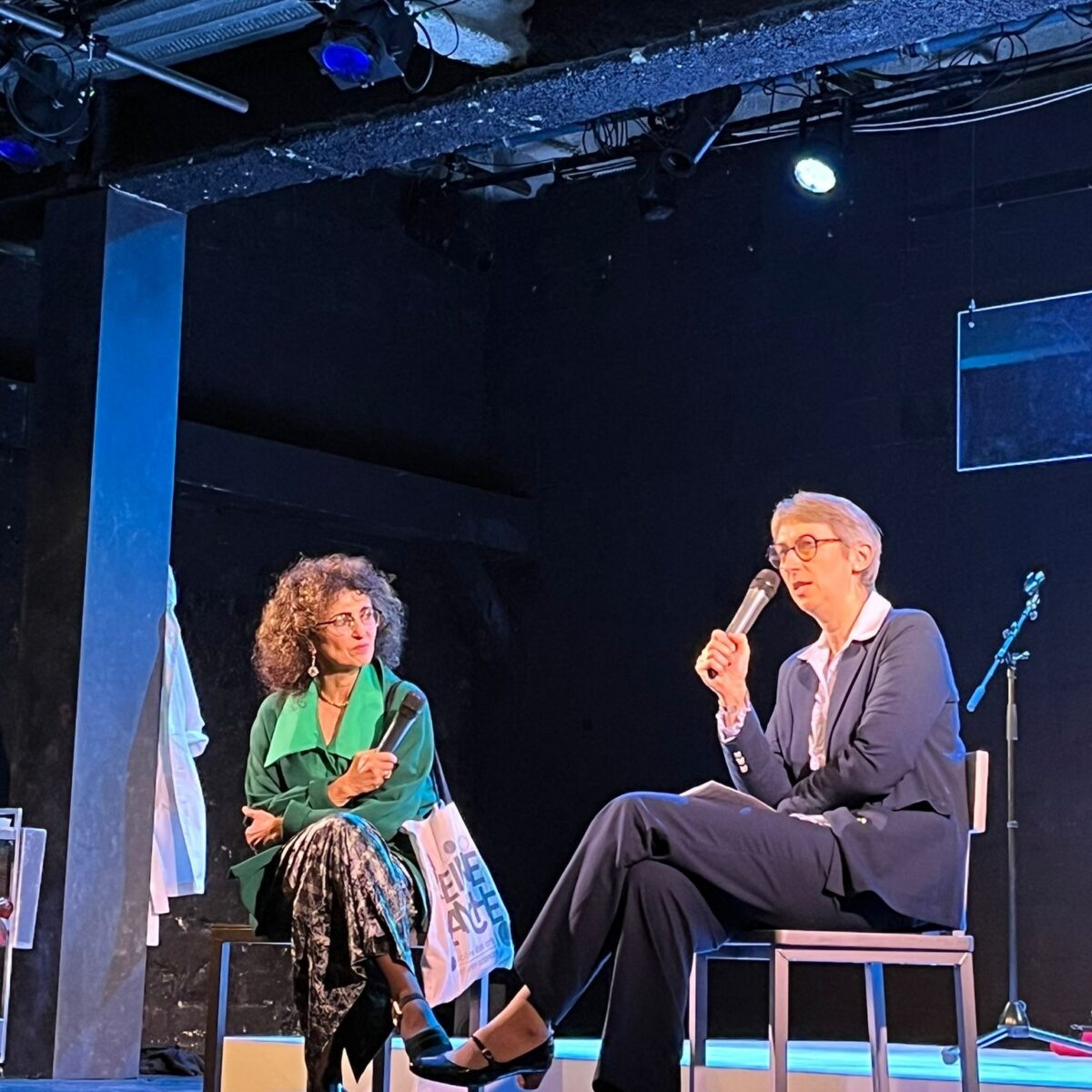
The performance of “The Forgotten Discoverer” at the Théâtre de la Reine Blanche offered another form of engagement. By highlighting Marthe Gautier and the story of the discovery of Down syndrome, the play underscores how scientific recognition has long been unevenly distributed. Scholarship recipients and patrons came together for a moment of discussion on the place of women in the history of science. The audience praised Marie-Christine Barrault for her committed performance, serving a well-deserved representation of gender parity.
A scholarship program with measurable impact
Beyond its events, the Foundation’s work is designed for the long term. Since 2023, the Women and Science scholarship program has awarded €1,000 per month for three years to female students admitted to the Concours Normalien Étudiant (CNE) in mathematics, computer science, and physics.
The initial results are tangible. Since the program’s launch, 39 recipients have been supported, including 9 new students for the 2025 academic year. Female applications to the CNE in physics have increased by 50%. The mathematics department has admitted its first gender-balanced cohort from the CNE, following the physics department.
A new momentum with the support of Cailabs
The Foundation is delighted to welcome a new committed patron, the company Cailabs, which strengthens this initiative. Each new partnership helps secure the program’s sustainability and expands its capacity for impact.
Achieving a lasting goal of gender parity in the scientific departments by 2030 requires stabilizing and expanding this support. €15,000 funds one year of a scholarship, while €45,000 secures a full three-year course.
The momentum is underway—but it still needs to be consolidated. Patron support is crucial to embedding gender parity permanently at the heart of ENS’s elite scientific programs.